



Welcome to Lilium News. Artificial intelligence is rapidly changing how people and businesses complete tasks, solve problems, and make decisions. From automated customer support to advanced research tools, AI systems are becoming more capable every day. One of the most important developments in this field is the rise of AI agents. If you are wondering what is ai agent, it is a type of intelligent software system that can understand goals, analyze information, make decisions, and perform tasks with limited human assistance.
Unlike traditional software that only follows fixed instructions, AI agents can adapt, reason, and take action based on changing situations. AI agents are becoming increasingly popular because they can automate complex workflows, improve productivity, and help businesses operate more efficiently. In this guide, we will explore how AI agents work, their different types, real-world examples, benefits, challenges, and their future impact on technology.
What Is AI Agent?
An AI agent is an artificial intelligence system designed to perform tasks independently by observing its environment, processing information, making decisions, and taking actions to achieve a specific goal. In simple terms, an AI agent works like a digital worker. It receives an objective, understands what needs to be done, creates a plan, uses available tools, and completes tasks automatically. For example, a traditional software program may require a user to manually enter information and select every action. An AI agent, however, can analyze a request, search for relevant information, decide the best approach, and complete multiple steps without constant instructions.
Simple Definition of an AI Agent
A traditional software program may require a user to manually enter information and select every action. An AI agent, however, can analyze a request, search for relevant information, decide the best approach, and complete multiple steps without constant instructions.
An AI agent can be defined as:
An autonomous software system that uses artificial intelligence to understand objectives, make decisions, and perform actions to complete tasks. The word “agent” refers to something that acts on behalf of someone or something else. An AI agent acts on behalf of a user, company, or system by completing assigned tasks.
For example:
A user tells an AI agent:
“Find the best marketing strategies for my new product and create a campaign plan.”
The AI agent may:
- Analyze the product information.
- Research market trends.
- Identify potential customers.
- Generate marketing ideas.
- Create a structured campaign plan.
A normal chatbot may only provide suggestions, while an AI agent can perform a complete workflow. This ability to independently manage tasks makes AI agents a major advancement in artificial intelligence technology.
Key Characteristics of AI Agents
AI agents have several key characteristics that make them different from traditional software applications. Unlike regular programs that follow fixed instructions, AI agents can understand goals, analyze information, make decisions, and take actions independently. They use artificial intelligence technologies such as machine learning and natural languacomplex tasks and respond to essing to handle comvide specific commands for every action, while AI agents can plan and complete multiple steplex tasks and adapt to changing situations. Traditional software usually requires users to provide instructions automatically.
Autonomy
The most important feature of an AI agent is its ability to operate independently without requiring constant human guidance. Unlike traditional software that depends on specific instructions for every action, AI agents can understand a goal, analyze the situation, and determine the necessary steps to complete a task. For example, an AI customer support agent can identify a customer’s problem, search for relevant information, provide a suitable solution, and escalate complex issues when needed.
For example, an AI sales agent can:
- Identify potential customers
- Analyze customer information
- Send personalized messages
- Track responses
without requiring a person to manually manage every step.
Reasoning and Decision-Making
AI agents can analyze information and choose suitable actions based on their goals. For example, an AI customer service agent can understand a customer’s problem, check available information, and decide whether to provide a solution, request more details, or transfer the issue to a human employee.
This reasoning capability allows AI agents to handle complex tasks instead of only responding with predefined answers. The most important feature of an AI agent is its ability to operate independently without requiring constant human guidance. Unlike traditional software that depends on specific instructions for every action, AI agents can understand a goal, analyze the situation, and determine the necessary steps to complete a task.
Learning Ability
Many AI agents can improve their performance by learning from previous interactions and feedback. Machine learning algorithms help AI agents recognize patterns, understand user preferences, and become more effective over time.
For example:
A personal AI assistant can learn:
- Your preferred communication style
- Your common tasks
- Your working schedule
- Your frequently used tools
This allows the AI agent to provide more personalized assistance.
Goal-Oriented Behavior
AI agents are designed to achieve specific objectives rather than simply provide information. A user can provide a goal, and the AI agent determines the necessary actions. The most important feature of an AI agent is its ability to operate independently without requiring constant human guidance.
An AI agent may:
- Review customer questions
- Identify common problems
- Create automated responses
- Recommend improvements
Ability to Use Tools
Modern AI agents can connect with external tools and systems to complete tasks. Unlike traditional software that depends on specific instructions for every action, AI agents can understand a goal, analyze the situation, and determine the necessary steps to complete a task. For example, an AI customer support agent can identify a
These tools may include:
- Databases
- APIs
- Search engines
- Business software
- Analytics platforms
- Communication applications
For example, an AI scheduling agent can access a calendar system, check availability, and automatically arrange meetings.
Read Also: ai kya hai in hindi
How Do AI Agents Work?
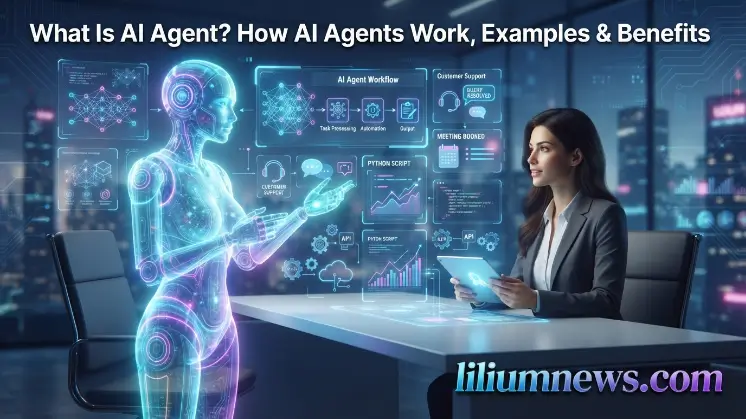
AI agents work by combining different artificial intelligence technologies that allow them to understand information, make decisions, and complete tasks automatically. Unlike traditional software programs that only follow predefined instructions, AI agents can analyze situations, create strategies, and adapt their actions based on new information. The working process of an AI agent involves several connected systems, including an AI model, memory, external tools, and reasoning capabilities. Together, these components allow AI agents to transform a simple user request into a complete workflow.
Main Components of AI Agents
AI agents are built using multiple components that work together to understand information, make decisions, and complete tasks. These components allow AI agents to operate intelligently instead of simply following predefined instructions. The working process of an AI agent involves several connected systems, including an AI model, memory, external tools, and reasoning capabilities. Together, these components allow AI agents to transform a simple user request into a complete workflow.
The main components of an AI agent include an AI model, memory system, tools, and reasoning capabilities. Each component plays an important role in helping the agent understand goals, create plans, and take effective actions. The working process of an AI agent involves several connected systems, including an AI model, memory, external tools, and reasoning capabilities. Together, these components allow AI agents to transform a simple user request into a complete workflow.
AI Model (The Brain of an AI Agent)
The AI model acts as the core intelligence of an AI agent. It helps the agent understand user requests, process information, generate responses, and make decisions. Modern AI agents often use large language models (LLMs) such as advanced language-based AI systems. These models allow agents to understand natural language and communicate with users in a human-like way.
The AI model helps the agent understand:
- What the user wants
- What information is required
- Which actions should be performed
- How to present the final results
The AI model provides reasoning and language understanding, but an AI agent becomes more powerful when combined with memory, tools, and automation capabilities.
Memory System
Memory is one of the most important components of an AI agent because it allows the system to store, recall, and use information from previous interactions. Instead of treating every request as completely new, an AI agent can remember important details, understand context, and build on past conversations. This capability enables the agent to deliver faster, more accurate, and more personalized responses.
Without memory, an AI agent would need to start from scratch every time it receives a request, making it less efficient and more repetitive. By remembering user preferences, previous tasks, and important information, the agent can provide a smoother experience and improve its performance over time. AI agent memory is generally divided into two main types: short-term memory and long-term memory.
Short-Term Memory
Short-term memory allows AI agents to temporarily store information during an active conversation or while completing a specific task. It helps the agent maintain context by remembering details shared earlier, enabling more natural and efficient interactions. This type of memory is usually cleared once the conversation or task is finished.
For example, a customer service AI agent can remember a customer’s name, account details, and the issue they described earlier in the conversation. Instead of asking for the same information repeatedly, the agent uses this context to provide faster and more relevant assistance, creating a smoother and more satisfying user experience.
Long-Term Memory
Short-term memory allows AI agents to temporarily store information during an active conversation or while completing a specific task. It helps the agent maintain context by remembering details shared earlier, enabling more natural and efficient interactions. This type of memory is usually cleared once the conversation or task is finished.
Examples include:
- User preferences
- Previous tasks
- Business information
- Frequently used workflows
A personal AI assistant with long-term memory can learn a user’s habits and provide better recommendations in future interactions.
Tools and External Connections
AI agents become more useful when they can connect with external tools and systems. Unlike simple AI models that only generate text, AI agents can use different resources to complete real-world tasks. A personal AI assistant with long-term memory can learn a user’s habits and provide better recommendations in future interactions.
Examples of tools used by AI agents include:
- Search engines
- Databases
- APIs
- Cloud platforms
- Business applications
- Analytics software
For example, an AI marketing agent can use analytics tools to check website performance, research competitors, analyze customer behavior, and create marketing recommendations. These tool connections allow AI agents to move from providing information to actually performing tasks.
Reasoning and Planning System
The reasoning and planning system helps AI agents decide how to complete a task effectively. When given a complex goal, an AI agent does not simply provide an answer. Instead, it breaks the goal into smaller steps and determines the best approach. Create a content marketing strategy for my website.
The AI agent may:
- Analyze the target audience.
- Research relevant keywords.
- Identify content opportunities.
- Create a publishing schedule.
- Suggest optimization strategies.
This planning ability allows AI agents to handle complicated workflows that require multiple decisions.
Types of AI Agents
AI agents can be classified into different types based on their intelligence, decision-making capabilities, learning ability, and level of autonomy. Each type is designed to handle specific tasks and solve different kinds of problems, ranging from simple rule-based actions to complex decision-making and autonomous task execution. Understanding these types helps users choose the right AI agent for their personal or business needs.
Simple Reflex Agents
Simple reflex agents are the most basic type of AI agents. They make decisions based only on the current situation and follow predefined rules. These agents do not store previous experiences or learn from past actions. AI agents can be categorized into different types based on their intelligence, learning ability, and level of independence.
Examples:
- Basic automated customer response systems
- Rule-based software assistants
- Simple recommendation systems
For example, a chatbot that responds with a fixed answer when it detects specific keywords is a simple reflex agent. Although these agents are limited, they are useful for tasks that require quick and predictable responses.
Goal-Based Agents
Goal-based agents are more advanced because they focus on achieving specific objectives. Instead of only reacting to current situations, these agents analyze possible actions and choose the best option to reach a goal. A travel planning AI agent may have the goal of creating the best vacation plan. It can consider:
- Budget
- Location preferences
- Travel dates
- Available activities
Then it creates recommendations based on the user’s requirements. Goal-based agents are commonly used in planning, automation, and decision-support systems.
Learning Agents
Learning agents can improve their performance by learning from experience, feedback, and new data. These AI agents use machine learning techniques to recognize patterns and make better decisions over time.
Examples include:
- Recommendation systems
- Personalized AI assistants
- Fraud detection systems
For example, a shopping AI agent can learn a user’s preferences by analyzing previous purchases and browsing behavior. Over time, it can provide more accurate product recommendations. The ability to learn makes these agents more flexible and effective than rule-based systems.
Autonomous AI Agents
Autonomous AI agents represent one of the most advanced forms of artificial intelligence systems. These agents can independently plan, make decisions, use tools, and complete complex tasks with minimal human involvement. The ability to learn makes these agents more flexible and effective than rule-based systems.
Examples include:
- AI research assistants
- Autonomous business agents
- Software development agents
A business AI agent, for example, may analyze market data, create reports, communicate with customers, and recommend strategies without requiring step-by-step instructions. Autonomous AI agents are becoming increasingly important because they can automate complex workflows and help organizations improve efficiency.
AI Agent Examples in Real Life
AI agents are no longer just a concept used in research labs; they are becoming an essential part of everyday life and business operations. From helping people manage daily tasks to automating complex business processes, AI agents are improving productivity, reducing manual work, and making smarter decisions across various industries. Whether you’re using a virtual assistant on your smartphone or an AI-powered system that automates customer support, chances are you’ve already interacted with an AI agent. Below are some of the most common real-world applications of AI agents.
Personal AI Assistants
Personal AI assistants help individuals organize their daily activities and improve productivity. These AI agents understand user requests, manage schedules, set reminders, answer questions, and even perform online research.
For example, a personal AI assistant can:
- Schedule meetings and appointments
- Set reminders for important tasks
- Answer general knowledge questions
- Summarize long documents
- Help write emails and reports
- Plan travel itineraries
As these assistants learn user preferences over time, they become more personalized and efficient.
Customer Service AI Agents
Customer service AI agents are widely used by businesses to provide fast and consistent support. Unlike traditional chatbots, these AI agents can understand customer intent, access company databases, and offer personalized solutions.
For example, a customer service AI agent can:
- Answer frequently asked questions
- Track orders and shipments
- Process refund requests
- Troubleshoot technical issues
- Escalate complex cases to human agents
By automating routine inquiries, businesses can reduce response times, lower support costs, and improve customer satisfaction.
Business AI Agents
Businesses use AI agents to automate repetitive tasks, improve decision-making, and increase operational efficiency. These agents can analyze data, generate reports, manage workflows, and support employees across different departments.
Common business applications include:
- Sales lead qualification
- Marketing campaign management
- Customer relationship management (CRM)
- Inventory tracking
- Financial reporting
- Business analytics
For example, a sales AI agent can identify potential customers, send personalized follow-up emails, and prioritize high-value leads, allowing sales teams to focus on closing deals.
Coding and Software Development AI Agents
AI agents are transforming software development by assisting programmers throughout the development process. They can write code, review existing code, identify bugs, suggest improvements, and automate testing.
Common tasks performed by coding AI agents include:
- Generating code snippets
- Debugging software
- Explaining programming concepts
- Refactoring code
- Writing documentation
- Running automated tests
These capabilities help developers save time, reduce errors, and improve overall software quality.
AI Agents vs Chatbots: What’s the Difference?
Although AI agents and chatbots are often used interchangeably, they are not the same. Traditional chatbots are designed primarily to answer questions and provide predefined responses, while AI agents are capable of understanding goals, making decisions, and performing actions independently. The biggest difference is that AI agents can complete tasks, whereas chatbots mainly focus on conversations.
| Feature | AI Agent | Traditional Chatbot |
| Understands goals | Yes | Limited |
| Makes decisions | Yes | Basic |
| Uses external tools | Yes | Sometimes |
| Performs tasks | Yes | Usually No |
| Learns from interactions | Yes | Limited |
| Handles complex workflows | Yes | No |
| Level of automation | High | Moderate |
For example, if a customer asks for a refund, a chatbot may simply explain the refund policy. An AI agent, however, can verify the order, check eligibility, process the refund, send a confirmation email, and update the company’s records automatically.
Benefits of AI Agents
AI agents offer numerous advantages for individuals and businesses by automating tasks, improving efficiency, and supporting better decision-making. As AI technology continues to evolve, these benefits are becoming even more valuable across different industries.AI agents can perform repetitive and time-consuming tasks much faster than humans. By automating routine work, they allow employees to focus on more strategic and creative activities. For example, an AI agent can automatically organize emails, generate reports, schedule meetings, and manage workflows, saving valuable time every day.
Increased Productivity
AI agents can perform repetitive and time-consuming tasks much faster than humans. By automating routine work, they allow employees to focus on more strategic and creative activities.
For example, an AI agent can automatically organize emails, generate reports, schedule meetings, and manage workflows, saving valuable time every day.
Better Automation
One of the biggest advantages of AI agents is their ability to automate complete workflows instead of individual tasks. They can coordinate multiple systems, access external tools, and complete complex processes with minimal human intervention. This level of automation helps businesses improve efficiency, reduce errors, and lower operational costs.
AI agents can perform repetitive and time-consuming tasks much faster than humans. By automating routine work, they allow employees to focus on more strategic and creative activities. For example, an AI agent can automatically organize emails, generate reports, schedule meetings, and manage workflows, saving valuable time every day.
Faster Decision-Making
AI agents can quickly analyze large amounts of data, identify patterns, and provide recommendations based on real-time information. This enables organizations to make faster and more informed decisions. For example, an AI agent in finance can analyze market trends and generate investment insights within seconds, helping professionals respond quickly to changing conditions.AI agents can perform repetitive and time-consuming tasks much faster than humans. By automating routine work, they allow employees to focus on more strategic and creative activities. For example, an
Improved Customer Experience
AI agents provide instant, personalized, and consistent support to customers. They are available 24/7 and can handle multiple requests simultaneously, reducing wait times and improving overall satisfaction.AI agents can perform repetitive and time-consuming tasks much faster than humans. By automating routine work, they allow employees to focus on more strategic and creative activities.
For example, an AI agent can automatically organize emails, generate reports, schedule meetings, and manage workflows, saving valuable time every day. Customers benefit from quicker responses, accurate information, and seamless service, while businesses can maintain high-quality support without significantly increasing costs.
Challenges and Limitations of AI Agents
While AI agents offer many advantages, they also come with certain challenges and limitations. Understanding these issues is important for businesses and individuals who want to use AI responsibly and effectively. Although AI agents can automate complex tasks and improve productivity, they still require high-quality data, proper configuration, and human oversight to deliver reliable results. Organizations should view AI agents as tools that enhance human capabilities rather than complete replacements for human expertise. Addressing these challenges through careful planning and continuous monitoring can help maximize the benefits of AI technology.
Data Privacy and Security
AI agents often process sensitive information, such as customer records, financial data, and business documents. If proper security measures are not in place, this information could be exposed to unauthorized access or cyberattacks. Businesses should implement strong security practices, including data encryption, secure authentication, and regular system updates, to protect user information and maintain compliance with privacy regulations.
Organizations should view AI agents as tools that enhance human capabilities rather than complete replacements for human expertise. Addressing these challenges through careful planning and continuous monitoring can help maximize the benefits of AI technology.
Incorrect or Biased Decisions
AI agents rely on the quality of the data they receive. If the training data is incomplete, outdated, or biased, the agent may generate inaccurate recommendations or make poor decisions. To reduce these risks, organizations should regularly review AI outputs, update training data, and involve human experts when making critical business decisions.
Organizations should view AI agents as tools that enhance human capabilities rather than complete replacements for human expertise. Addressing these challenges through careful planning and continuous monitoring can help maximize the benefits of AI technology. Developing and deploying advanced AI agents can require significant investment in software, infrastructure, and skilled professionals. Smaller businesses may find the initial setup costs challenging, especially for highly customized AI solutions.
High Implementation Costs
Developing and deploying advanced AI agents can require significant investment in software, infrastructure, and skilled professionals. Smaller businesses may find the initial setup costs challenging, especially for highly customized AI solutions. However, as AI technology becomes more accessible, cloud-based AI platforms and ready-made frameworks are making implementation more affordable for businesses of all sizes.
Developing and deploying advanced AI agents can require significant investment in software, infrastructure, and skilled professionals. Smaller businesses may find the initial setup costs challenging, especially for highly customized AI solutions. Regular monitoring helps ensure that AI agents perform accurately, follow company policies, and make decisions that align with business goals.
Need for Human Supervision
Although AI agents can work independently, they should not operate without human oversight. Complex situations, ethical concerns, and unexpected scenarios often require human judgment. Regular monitoring helps ensure that AI agents perform accurately, follow company policies, and make decisions that align with business goals.
Businesses across various industries are adopting AI agents to improve efficiency, reduce operational costs, and deliver better customer experiences. By automating repetitive tasks and supporting intelligent decision-making, AI agents enable organizations to focus on innovation and strategic growth.
How Businesses Use AI Agents
Businesses across various industries are adopting AI agents to improve efficiency, reduce operational costs, and deliver better customer experiences. By automating repetitive tasks and supporting intelligent decision-making, AI agents enable organizations to focus on innovation and strategic growth. Below are some of the most common ways businesses use AI agents today. Developing and deploying advanced AI agents can require significant investment in software, infrastructure, and skilled professionals. Smaller businesses may find the initial setup costs challenging, especially for highly customized AI solutions. Regular monitoring helps ensure that AI agents perform accurately, follow company policies, and make decisions that align with business goals.
Marketing Automation
Marketing teams use AI agents to streamline campaigns, analyze customer behavior, and create personalized content. These agents can monitor marketing performance, identify trends, and recommend strategies to improve engagement and conversions.
Common marketing tasks include:
- Keyword research
- Content planning
- Email campaign automation
- Social media scheduling
- Customer segmentation
- Performance reporting
Sales Support
AI agents help sales teams manage leads more efficiently by identifying potential customers, qualifying prospects, and automating follow-up communications. This allows sales professionals to focus on building relationships and closing deals.
A sales AI agent can:
- Analyze customer data
- Score leads based on buying potential
- Send personalized follow-up emails
- Schedule meetings
- Generate sales reports
This allows sales professionals to focus on building relationships and closing deals.
Customer Service
Customer support is one of the most popular applications of AI agents. They can answer common questions, process requests, troubleshoot issues, and assist around the clock. This allows sales professionals to focus on building relationships and closing deals.
Benefits include:
- Faster response times
- 24/7 availability
- Reduced support costs
- Consistent customer experiences
- Improved customer satisfaction
Healthcare Applications
Healthcare organizations use AI agents to support administrative tasks, assist medical professionals, and improve patient care. This allows sales professionals to focus on building relationships and closing deals. While AI agents improve efficiency, healthcare decisions should always involve qualified medical professionals.
Examples include:
- Appointment scheduling
- Patient record management
- Medical documentation
- Treatment recommendations
- Clinical data analysis
While AI agents improve efficiency, healthcare decisions should always involve qualified medical professionals.
Finance and Banking
Financial institutions use AI agents to automate processes, detect fraud, analyze market data, and improve customer service. While AI agents improve efficiency, healthcare decisions should always involve qualified medical professionals. These capabilities help financial organizations improve accuracy while reducing manual workloads.
Common applications include:
- Fraud detection
- Risk assessment
- Loan processing
- Investment analysis
- Financial reporting
- Customer account support
These capabilities help financial organizations improve accuracy while reducing manual workloads.
How to Create an AI Agent
Creating an AI agent involves more than choosing an AI model. It requires careful planning, access to relevant data, and the right tools to achieve a specific goal. Whether you’re building a personal assistant or a business automation system, following a structured process increases the chances of success. These capabilities help financial organizations improve accuracy while reducing manual workloads. A clearly defined objective helps determine the features and capabilities your AI agent will need.
Step 1: Define the Goal
Start by identifying the problem your AI agent should solve. Whether you’re building a personal assistant or a business automation system, following a structured process increases the chances of success. These capabilities help financial organizations improve accuracy while reducing manual workloads. A clearly defined objective helps determine the features and capabilities your AI agent will need.
Examples include:
- Automating customer support
- Managing emails
- Generating reports
- Scheduling meetings
- Analyzing business data
A clearly defined objective helps determine the features and capabilities your AI agent will need.
Step 2: Choose an AI Model
Select an AI model that matches your requirements. Many modern AI agents are built using large language models combined with machine learning techniques. Whether you’re building a personal assistant or a business automation system, following a structured process increases the chances of success. These capabilities help financial organizations improve accuracy while reducing manual workloads. A clearly defined objective helps determine the features and capabilities your AI agent will need.
When choosing a model, consider:
- Accuracy
- Language support
- Performance
- Cost
- Integration options
The right model provides the intelligence needed for understanding requests and generating meaningful responses.
Step 3: Connect Tools and Data Sources
To perform useful tasks, AI agents need access to external systems such as: Whether you’re building a personal assistant or a business automation system, following a structured process increases the chances of success. These capabilities help financial organizations improve accuracy while reducing manual workloads. A clearly defined objective helps determine the features and capabilities your AI agent will need.
- APIs
- Databases
- CRM software
- Email platforms
- Calendar applications
- Cloud storage
These integrations enable the agent to retrieve information and complete real-world actions instead of simply providing answers.
Step 4: Test and Improve
Before deployment, thoroughly test your AI agent using different scenarios to identify errors and improve performance. Whether you’re building a personal assistant or a business automation system, following a structured process increases the chances of success. These capabilities help financial organizations improve accuracy while reducing manual workloads. A clearly defined objective helps determine the features and capabilities your AI agent will need.
Monitor:
- Accuracy
- Response quality
- Speed
- User feedback
- Task completion rate
Continuous testing and refinement ensure the AI agent remains reliable as business needs evolve.
Common Mistakes When Using AI Agents
Many organizations expect AI agents to solve every problem automatically, but successful implementation requires proper planning and management. Avoiding common mistakes can significantly improve the performance and reliability of your AI system. Whether you’re building a personal assistant or a business automation system, following a structured process increases the chances of success. These capabilities help financial organizations improve accuracy while reducing manual workloads. A clearly defined objective helps determine the features and capabilities your AI agent will need.
Some of the most common mistakes include:
- Setting unclear goals or expectations
- Using poor-quality or outdated data
- Ignoring human oversight
- Failing to monitor AI performance
- Expecting complete autonomy from the beginning
- Neglecting data privacy and security
By defining clear objectives, maintaining high-quality data, and regularly reviewing AI outputs, businesses can maximize the value of AI agents.
The Future of AI Agents
The future of AI agents looks incredibly promising as advancements in artificial intelligence continue to accelerate. Future AI agents will become more autonomous, collaborative, and capable of handling increasingly complex tasks across industries. By defining clear objectives, maintaining high-quality data, and regularly reviewing AI outputs, businesses can maximize the value of AI agents. As technology evolves, AI agents are expected to become trusted digital collaborators that support professionals in healthcare, education, finance, software development, and many other fields.
Emerging trends include:
- Multi-agent systems working together
- More advanced reasoning capabilities
- Improved long-term memory
- Better integration with business software
- Increased use of generative AI
- Personalized digital assistants
As technology evolves, AI agents are expected to become trusted digital collaborators that support professionals in healthcare, education, finance, software development, and many other fields. Rather than replacing humans, AI agents will enhance productivity by automating repetitive work and enabling people to focus on creativity, innovation, and strategic decision-making.
Frequently Asked Questions
What is an AI agent in simple words?
An AI agent is an intelligent software program that can understand goals, make decisions, and perform tasks automatically with minimal human assistance. It can analyze information, use tools, and adapt to changing situations to complete specific objectives.
How is an AI agent different from ChatGPT?
ChatGPT is mainly designed to generate text-based responses and answer questions, while an AI agent can go beyond conversation by planning tasks, using external tools, and completing actions such as scheduling meetings, analyzing data, or sending emails.
What are some examples of AI agents?
Companies use AI agents for a wide range of business activities, including customer support, marketing automation, sales management, financial analysis, software development, human resources, and workflow automation.
Are AI agents replacing humans?
No. AI agents are designed to assist humans rather than replace them. They automate repetitive tasks and improve efficiency, allowing people to focus on creative thinking, strategic planning, and complex decision-making.
How do companies use AI agents?
Companies use AI agents for a wide range of business activities, including customer support, marketing automation, sales management, financial analysis, software development, human resources, and workflow automation.
Conclusion
Understanding what is ai agent is becoming increasingly important as artificial intelligence continues to reshape the way we work and live. AI agents are intelligent systems capable of understanding goals, making decisions, using external tools, and completing tasks with minimal human intervention. Their ability to learn, adapt, and automate complex workflows makes them valuable across industries ranging from customer service to healthcare and finance.
As AI technology continues to advance, AI agents will play an even greater role in improving productivity, supporting better decision-making, and transforming business operations. Whether you are a business owner, developer, or someone simply interested in artificial intelligence, learning about what is ai agent provides a strong foundation for understanding the next generation of intelligent automation.
