



Welcome to Lilium News. Artificial Intelligence has become one of the most discussed technologies in the modern world. From smartphones and search engines to healthcare and businesses, AI is changing the way people work and live. Many people search for ai kya hai in hindi because they want to understand how machines can perform tasks that normally require human intelligence.
In simple words, Artificial Intelligence (AI) is a technology that allows machines and computer systems to learn, analyze information, solve problems, and make decisions similar to humans. In this guide, we will explore what AI is, how it works, its types, real-life applications, benefits, challenges, and the future of this powerful technology.
What Is AI? Understanding Artificial Intelligence
Artificial Intelligence refers to the ability of machines or computer programs to perform tasks that usually require human intelligence. These tasks include learning from experience, understanding language, recognizing images, solving problems, and making predictions.AI systems use advanced algorithms, large amounts of data, and computing power to identify patterns and generate useful results. Unlike traditional software that follows fixed instructions, AI systems can improve their performance by learning from new information.
Definition of Artificial Intelligence
Artificial Intelligence is a branch of computer science focused on creating machines that can simulate human intelligence. The main goal of AI is to develop systems that can think, learn, and perform tasks independently. Unlike traditional software that follows fixed instructions, AI systems can improve their performance by learning from new information.
Examples of AI include:
- Voice assistants that understand human commands
- Recommendation systems on shopping and streaming platforms
- AI chatbots that answer questions
- Smart navigation systems
- Image recognition technology
How AI Works
AI works by collecting data, analyzing patterns, and using algorithms to make decisions. The basic process includes: Unlike traditional software that follows fixed instructions, AI systems can improve their performance by learning from new information.AI systems use advanced algorithms, large amounts of data, and computing power to identify patterns and generate useful results.
- Data Collection: AI systems gather information from different sources.
- Data Processing: The system analyzes and organizes the collected data.
- Machine Learning: AI learns patterns from previous information.
- Decision Making: The system provides predictions, recommendations, or actions.
The more quality data an AI system receives, the better it can perform its tasks.
Types of Artificial Intelligence
Artificial Intelligence can be divided into different categories based on its abilities, functionality, and level of intelligence. These categories help us understand how advanced an AI system is and what types of tasks it can perform. Some AI systems are designed to handle only specific tasks, while others represent future concepts that may have human-like intelligence. The main categories of Artificial Intelligence include Narrow AI, General AI, and Super AI.
Narrow AI (Weak AI)
Narrow AI is the most common type of AI used today. It is designed to perform specific tasks but cannot think beyond its programming. Some AI systems are designed to handle only specific tasks, while others represent future concepts that may have human-like intelligence. The main categories of Artificial Intelligence include Narrow AI, General AI, and Super AI.
Examples include:
- Google search algorithms
- Face recognition systems
- AI writing assistants
- Virtual assistants
Most AI applications currently available are examples of Narrow AI.
General AI (AGI)
Some AI systems are designed to handle only specific tasks, while others represent future concepts that may have human-like intelligence. The main categories of Artificial Intelligence include Narrow AI, General AI, and Super AI. Artificial General Intelligence refers to a theoretical AI system that can perform any intellectual task that a human can do.
AGI would be able to:
- Understand different subjects
- Learn new skills independently
- Apply knowledge across multiple areas
Currently, AGI does not exist and remains a major research goal in the AI field.
Super AI
Some AI systems are designed to handle only specific tasks, while others represent future concepts that may have human-like intelligence. The main categories of Artificial Intelligence include Narrow AI, General AI, and Super AI. Super Artificial Intelligence refers to a future concept where AI becomes more intelligent than humans in almost every area.
Potential abilities could include:
- Advanced problem-solving
- Scientific discoveries
- Complex decision-making
However, Super AI also raises important questions about safety and ethical development.
Read Also: How AI Works
How Does Artificial Intelligence Work?
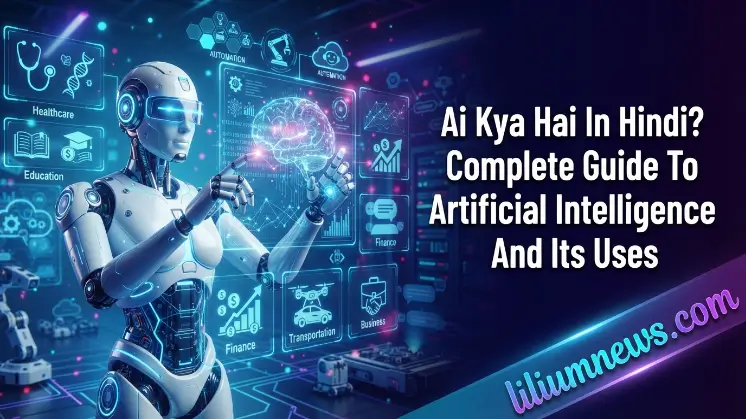
AI works through several advanced technologies that allow machines to collect data, learn from experiences, and process information efficiently. These technologies enable AI systems to recognize patterns, understand human instructions, make predictions, and perform tasks that normally require human intelligence. By using algorithms, data, and computing power, AI can continuously improve its performance over time. The main technologies behind AI include machine learning, deep learning, and natural language processing (NLP). Machine learning helps computers learn from data, deep learning uses neural networks to handle complex tasks, and NLP allows machines to understand and communicate using human language.
Machine Learning
Machine Learning is a major part of AI that allows computers to learn from data without being directly programmed for every task. For example, an email system can learn to identify spam messages by analyzing thousands of previous examples. Common uses of machine learning include:
- Fraud detection
- Product recommendations
- Weather prediction
- Customer analysis
Deep Learning
Deep Learning is an advanced form of machine learning that uses artificial neural networks inspired by the human brain. Deep learning helps AI systems perform complex tasks such as. The main technologies behind AI include machine learning, deep learning, and natural language processing (NLP).
- Image recognition
- Speech recognition
- Language understanding
- Autonomous vehicles
Natural Language Processing (NLP)
Natural Language Processing allows computers to understand and communicate using human language. The main technologies behind AI include machine learning, deep learning, and natural language processing (NLP). Machine learning helps computers learn from data, deep learning uses neural networks to handle complex tasks, and NLP allows machines to understand and communicate using human language.
Examples include:
- AI chatbots
- Translation tools
- Voice assistants
- Text analysis systems
NLP is the technology that helps AI understand questions and provide human-like responses.
Real-Life Examples and Applications of AI
Artificial Intelligence is already being used in many industries and everyday activities to make tasks faster, smarter, and more efficient. From healthcare and education to business and entertainment, AI helps people solve problems, analyze data, and improve decision-making. Many technologies we use daily, such as search engines, smartphones, and online recommendations, are powered by AI. Businesses and organizations are adopting AI to automate repetitive tasks, improve customer experiences, and create better solutions. In healthcare, AI helps doctors with diagnosis and research, while in education it supports personalized learning.
AI in Healthcare
AI is improving healthcare by helping doctors diagnose diseases and analyze medical information. Artificial Intelligence is already being used in many industries and everyday activities to make tasks faster, smarter, and more efficient. Businesses and organizations are adopting AI to automate repetitive tasks, improve customer experiences, and create better solutions.
Examples include:
- Medical image analysis
- Disease prediction
- Drug research
- Patient monitoring
AI helps healthcare professionals make faster and more accurate decisions.
AI in Education
AI is transforming education through personalized learning experiences. Businesses and organizations are adopting AI to automate repetitive tasks, improve customer experiences, and create better solutions. In healthcare, AI helps doctors with diagnosis and research, while in education it supports personalized learning.
Applications include:
- AI tutors
- Automated grading systems
- Learning recommendations
- Educational chatbots
Students can receive customized learning support based on their needs.
AI in Business
Businesses use AI to improve efficiency and understand customers better. Businesses and organizations are adopting AI to automate repetitive tasks, improve customer experiences, and create better solutions. In healthcare, AI helps doctors with diagnosis and research, while in education it supports personalized learning.
Common applications include:
- Customer support chatbots
- Marketing automation
- Sales prediction
- Data analysis
AI helps companies save time and make smarter decisions.
AI in Daily Life
Businesses and organizations are adopting AI to automate repetitive tasks, improve customer experiences, and create better solutions. In healthcare, AI helps doctors with diagnosis and research, while in education it supports personalized learning. Many people use AI every day without realizing it.
Examples include:
- Search engines
- Social media recommendations
- Smart assistants
- Online shopping suggestions
- Navigation applications
These systems use AI to provide faster and more personalized experiences.
Benefits of Artificial Intelligence
Artificial Intelligence provides many advantages for individuals and organizations by improving efficiency, accuracy, and productivity. AI systems can process large amounts of information quickly, automate repetitive tasks, and help people make better decisions. This allows individuals to save time and focus on more important and creative activities. Organizations use AI to improve operations, understand customer behavior, and develop innovative solutions.
Faster Decision Making
AI can analyze large amounts of data quickly and provide useful insights within seconds, helping individuals and organizations make faster and more informed decisions. Unlike humans, who may take hours or days to process complex information, AI systems can identify patterns, trends, and relationships from huge datasets in a short time.
This ability is especially useful in areas like healthcare, finance, marketing, and business analysis. By converting raw data into meaningful information, AI helps improve accuracy, predict future outcomes, and create better strategies.
Automation of Repetitive Tasks
AI can handle repetitive work, allowing humans to focus on more creative and strategic activities. By automating routine tasks such as data entry, scheduling, customer support, and information processing, AI helps save time and improves overall efficiency. This allows employees and professionals to spend more time on tasks that require human skills like creativity, critical thinking, and problem-solving.
Organizations use AI automation to increase productivity and reduce manual effort. For example, AI-powered tools can manage repetitive business processes, analyze reports, and respond to common customer questions. As a result, humans can focus on innovation, planning, and making important decisions that require experience and judgment.
Improved Accuracy
AI systems can reduce human errors in areas such as data analysis and medical diagnosis by providing accurate calculations, identifying patterns, and analyzing complex information. Since AI can process large amounts of data with high speed and consistency, it helps minimize mistakes that may occur due to human limitations or manual processing.
In healthcare, AI can assist doctors by analyzing medical images, detecting early signs of diseases, and supporting accurate diagnoses. In business and research, AI improves data analysis by finding valuable insights and trends. However, human expertise and supervision remain important to ensure AI results are used correctly and responsibly.
Increased Productivity
Businesses use AI tools to complete tasks faster and improve overall efficiency by automating processes, analyzing data, and providing smarter solutions. AI helps companies reduce the time required for routine tasks such as customer support, reporting, data management, and marketing activities. This allows employees to focus on more important tasks that require creativity and strategic thinking.
By using AI-powered systems, businesses can improve productivity, reduce operational costs, and deliver better services to customers. From predicting market trends to personalizing customer experiences, AI helps organizations make faster decisions and stay competitive in a rapidly changing digital environment.
Better User Experience
AI-powered recommendations and personalized services create better experiences for users by understanding their preferences, behaviors, and needs. AI systems analyze user data, such as search history, previous purchases, and online activities, to provide relevant suggestions and customized solutions.
For example, streaming platforms recommend movies based on viewing habits, while online stores suggest products that match customer interests. This personalization helps users find useful information faster, improves satisfaction, and creates a more convenient digital experience.
Challenges and Limitations of AI
Although AI offers many benefits, it also has some challenges that need to be carefully managed. Issues such as data privacy, security risks, job displacement, and inaccurate decisions can create concerns about the responsible use of Artificial Intelligence. As AI systems become more advanced, ensuring fairness, transparency, and safety becomes increasingly important.
Organizations and developers must focus on creating ethical AI systems that protect user information and minimize potential risks. By addressing these challenges properly, society can maximize the benefits of AI while reducing its negative impacts.
Data Privacy Issues
AI systems often require large amounts of data to learn, improve performance, and provide accurate results. However, collecting and processing this information creates concerns about data privacy and security. Personal information, such as user preferences, online activities, and sensitive details, must be protected from misuse or unauthorized access.
Companies must ensure that user data is collected, stored, and used responsibly by following proper privacy practices. Transparency, strong security measures, and responsible data management are essential to building trust between users and AI-powered systems.
Job Replacement Concerns
Automation through AI may change many job roles by reducing the need for certain repetitive tasks and traditional workflows. Jobs that involve routine data processing, basic customer support, or manual operations may be affected as businesses adopt AI-powered solutions to improve efficiency.
However, AI is also creating new career opportunities in areas such as AI development, data science, cybersecurity, and technology management. Instead of completely replacing humans, AI is expected to transform the way people work by helping them focus on more creative, strategic, and complex tasks. Developing new skills and adapting to technological changes will be important for future career growth.
AI Bias and Errors
AI systems learn from the data they receive, which means the quality of data directly affects their performance. If the training data contains mistakes, incomplete information, or unfair patterns, the AI system may produce inaccurate or biased results. This can impact decision-making in areas such as hiring, healthcare, finance, and security.
Responsible AI development is necessary to reduce these problems and ensure that AI systems are fair, transparent, and reliable. Developers must use high-quality data, regularly test AI models, and apply ethical guidelines to create systems that provide accurate and trustworthy results.
Popular AI Tools and Technologies
Today, many AI tools are helping people in different fields. Responsible AI development is necessary to reduce these problems and ensure that AI systems are fair, transparent, and reliable. Developers must use high-quality data, regularly test AI models, and apply ethical guidelines to create systems that provide accurate and trustworthy results.
| Category | Examples |
| AI Chatbots | Conversational AI assistants |
| Writing Tools | AI content and grammar assistants |
| Image Generation | AI design and image creation tools |
| Business AI | Automation and analytics platforms |
Modern AI tools help users create content, analyze information, automate tasks, and improve productivity.
Future of Artificial Intelligence
The future of Artificial Intelligence is expected to bring major changes across industries. Responsible AI development is necessary to reduce these problems and ensure that AI systems are fair, transparent, and reliable. Developers must use high-quality data, regularly test AI models, and apply ethical guidelines to create systems that provide accurate and trustworthy results.
Future developments may include:
- More advanced AI assistants
- Smarter automation systems
- Improved healthcare solutions
- Better scientific research tools
- More personalized digital experiences
AI will likely become a powerful partner for humans rather than simply replacing human abilities. The combination of human creativity and machine intelligence can create new opportunities.
Frequently Asked Questions
AI kya hai in hindi in simple words?
AI is a technology that enables machines and computers to learn, understand information, and perform tasks that usually require human intelligence.
How does Artificial Intelligence work?
AI works by using data, algorithms, and machine learning techniques to identify patterns and make decisions.
What are the main types of AI?
The three main types of AI are Narrow AI, General AI, and Super AI.
Is AI dangerous for humans?
AI itself is a tool. Its impact depends on how humans develop and use it. Responsible use can reduce risks.
How can I learn Artificial Intelligence?
Beginners can learn AI by studying basic concepts, learning programming, practicing with AI tools, and exploring machine learning.
Conclusion
Artificial Intelligence is one of the most important technologies shaping the future because it is changing how people work, learn, and solve problems. Understanding ai kya hai in hindi helps people recognize how machines use data, algorithms, and advanced technologies to perform tasks that normally require human intelligence. AI is improving different fields, including healthcare, education, business, and daily life, by making processes faster and more efficient.
Although AI offers many benefits, it also comes with challenges such as data privacy, security risks, and ethical concerns. With responsible development and proper use, AI can create new opportunities and help society achieve better results. Learning about Artificial Intelligence today allows individuals and businesses to prepare for future technological changes and make better use of AI-powered solutions.
