


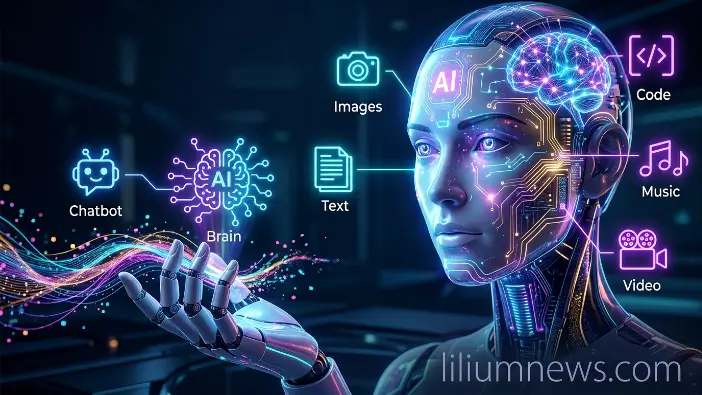
Artificial intelligence is changing how people work, study, communicate, and produce content. Among the many areas of AI, what is generative AI has become a widely discussed topic because of its ability to create new content, including text, images, videos, music, and even computer code. Unlike traditional AI systems that primarily analyze information or make predictions, generative AI can produce new outputs by learning patterns from large collections of data.
Understanding what is generative AI is useful for students, professionals, businesses, and anyone interested in modern technology. From AI chatbots and image creation tools to automated content platforms, generative AI is influencing industries around the world. This guide explains the concept in simple English, including how generative AI works, its advantages, challenges, practical uses, and future possibilities.
Understanding What Is Generative AI
Understanding what is generative AI is an important starting point for learning how modern artificial intelligence operates. In simple terms, generative AI is a type of AI that can do more than analyze information because it can also create new content based on what it has learned. This content may include text, images, videos, music, or computer code. The technology studies large amounts of data to identify patterns and then uses those patterns to produce new outputs. In today’s digital environment, what is generative AI is an important question because this technology is influencing how people communicate, work, and develop creative ideas. From writing articles to creating digital graphics, generative AI is becoming a useful technology across many industries. The following points explain the concept in greater detail.
Definition of Generative AI
Generative AI is a branch of artificial intelligence designed to create new content from patterns learned through existing data. It can learn from large collections of text, images, videos, audio, and other information. Rather than simply examining information or predicting an outcome, it uses its learned patterns to produce new outputs that were not previously created in that exact form. This makes it different from many traditional AI systems. For example, if you give it a prompt such as “write a story about space,” it can use its understanding of language and storytelling patterns to generate a new story.
In simple terms, generative AI can be viewed as a digital creation assistant. It learns patterns in language, visuals, and other forms of human-created content and uses them to produce results based on a user’s instructions. This allows it to write articles, create images, compose music, summarize information, and generate computer code. Because of these capabilities, generative AI is being used in areas such as education, business, marketing, design, and software development, where it can help people complete creative and repetitive tasks more efficiently.
Why Generative AI Is Different From Traditional AI
Generative AI differs from traditional AI because the two are generally built for different purposes and can produce different kinds of results. Traditional AI is primarily used to analyze information, identify patterns, classify data, and make predictions or decisions based on existing information. For example, traditional AI can help detect spam emails, recommend products, or recognize faces in images. It processes existing data to perform a specific task rather than primarily creating new content.
Generative AI, in contrast, is focused on producing new content instead of only analyzing existing information. It can write essays, create images, compose music, and generate computer code in response to user instructions. Rather than relying only on fixed responses or predefined rules, generative models learn patterns from large datasets and use those patterns to produce new results. In simple terms, traditional AI mainly helps machines analyze and interpret information, while generative AI enables machines to create new content based on learned patterns and prompts.
Simple Explanation for Beginners
To understand what is generative AI in the easiest way, imagine a highly capable digital assistant that has learned from millions of examples of written language, images, and other forms of human-created content. It does not simply retrieve one piece of information and copy it. Instead, it learns patterns from the data it processes. When you give it a question or task, it uses those learned patterns to understand the request and generate a relevant response.
For example, if you ask it to write a poem, it does not necessarily retrieve and reproduce an existing poem. Instead, it can generate a new poem based on its learned understanding of language, structure, and writing styles. In a similar way, it can create images, explain concepts, summarize information, or respond to questions in natural language. This is why it is called “generative” AI: its key function is to generate new content rather than simply analyze or classify existing information.
Read also: is pixverse ai free
How Generative AI Works
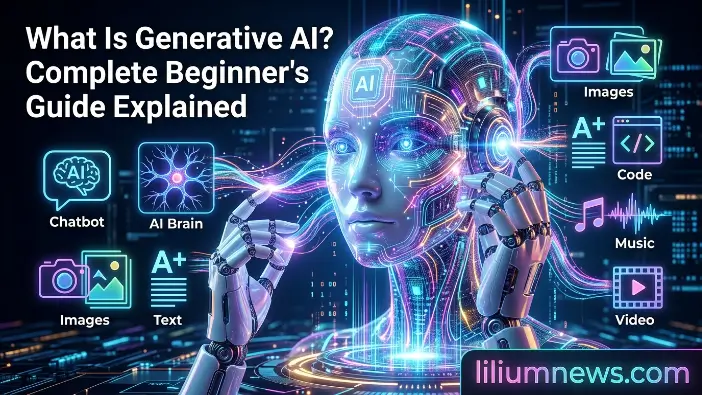
Understanding what is generative AI becomes easier when you know how this technology works. Generative AI uses machine learning models trained on large amounts of data. These models learn patterns from text, images, audio, videos, and other information. They then use those patterns to create new content based on user instructions.
Understanding What Is Generative AI
Generative AI is a type of artificial intelligence that can create new content instead of only analyzing existing information. It can produce text, images, videos, music, and computer code based on user prompts.
The technology learns patterns from large datasets and uses those patterns to generate new outputs. This makes generative AI different from traditional AI systems that mainly focus on classification, prediction, and data analysis.
Definition of Generative AI
Generative AI refers to AI systems that are designed to create new content from patterns learned during training. The content can include written text, images, audio, videos, and code.
For example, when a user asks an AI tool to write a story about space, the system uses its learned understanding of language and storytelling patterns to generate a new response.
How Generative AI Works
Generative AI generally works through three main stages:
- Data Collection: Large amounts of text, images, audio, videos, and other data are collected.
- Model Training: The AI studies the data and learns patterns, structures, and relationships.
- Content Generation: The trained model uses a user’s prompt to create a new output based on its learned patterns.
The model does not simply retrieve one ready-made answer. It generates a response by using patterns and probabilities learned during training.
Why Generative AI Is Different From Traditional AI
Traditional AI mainly analyzes information, identifies patterns, makes predictions, or supports decisions. For example, it can detect spam emails or recommend products.
Generative AI focuses on creating new content. It can write text, generate images, create music, produce videos, and write computer code. In simple terms, traditional AI mainly analyzes and predicts, while generative AI creates.
Types of Generative AI Models
Different generative AI models are designed for different types of content. Some focus on text, while others can generate images, audio, video, or multiple forms of content.
Large Language Models (LLMs)
Large Language Models (LLMs) are designed to understand and generate human language. They are trained on large collections of text and can perform tasks such as answering questions, writing content, summarizing information, translating languages, and generating code.
LLMs are commonly used in AI chatbots and other text-based generative AI tools.
Generative Adversarial Networks (GANs)
Generative Adversarial Networks (GANs) are models used to create realistic visual content. They contain a generator that creates content and a discriminator that evaluates whether the content appears real or artificial.
GANs have been used for generating images, faces, landscapes, and other visual content.
Diffusion Models
Diffusion models are widely used for image generation. They generally start with random noise and gradually transform it into a detailed image based on a user’s prompt.
For example, a prompt such as “a sunset over mountains” can guide the model as it turns random noise into an image matching the description.
Variational Autoencoders (VAEs)
Variational Autoencoders (VAEs) learn to represent data in a compressed form and then reconstruct it. They can also generate new content that shares characteristics with the training data.
VAEs are used in areas such as image generation and data-related applications.
Multimodal AI Models
Multimodal AI models can work with multiple types of information, including text, images, audio, and video. They can understand one type of input and produce another type of output.
For example, a multimodal AI system can analyze an image and describe it in text or use a written prompt to generate an image.
Popular Examples of Generative AI
Generative AI can be found in many tools used for creating different types of content.
AI Chatbots
AI chatbots use generative AI to understand user questions and produce natural-language responses. They can help with writing, explanations, brainstorming, summarization, and many other text-based tasks.
AI Image Generators
AI image generators create visuals from text prompts. Users can describe an object, scene, or style, and the AI generates an image based on that description.
AI Video Creation Tools
AI video tools can generate videos from text prompts, images, or scripts. They can combine visuals, animations, audio, and other elements to create video content.
AI Music Generators
AI music generators create music based on instructions such as genre, mood, style, or instruments. They can produce melodies, beats, background tracks, and other musical content.
AI Coding Assistants
AI coding assistants use generative AI to generate code, complete functions, explain programming concepts, and suggest corrections. They help developers work with programming languages more efficiently.
AI Content Writing Tools
AI content writing tools use generative AI to create articles, blog posts, emails, product descriptions, and social media content. Users provide a topic or prompt, and the tool generates written content based on the instructions.
Key Features of Generative AI
The main features of generative AI explain why it can create such a wide range of content.
Content Creation
The most important feature of generative AI is its ability to create new content. It can generate text, images, videos, music, and code from user instructions.
Personalization
Generative AI can adjust its output according to user instructions. Users can request a specific tone, style, format, length, or level of detail.
Natural Language Understanding
Generative AI can understand natural-language instructions and respond based on the meaning and context of the user’s request. This allows people to interact with AI using everyday language.
Automation
Generative AI can automate repetitive content-related tasks such as creating summaries, drafting emails, generating reports, and producing other forms of written or visual content.
Benefits of Generative AI
Generative AI can help people create content faster, explore ideas, and reduce repetitive work.
Increased Productivity
Generative AI can create content, summaries, ideas, and other outputs quickly. This saves time and allows users to focus on more important tasks.
Faster Content Creation
Users can generate articles, images, videos, music, and code from simple prompts. This can make the content creation process faster and easier.
Creativity Enhancement
Generative AI can provide ideas and suggestions that help users brainstorm and explore different creative possibilities. It can serve as a starting point for writing, design, and other creative work.
Challenges and Limitations of Generative AI
Understanding what is generative AI also requires knowing its limitations. AI-generated content is not always accurate, unbiased, original, or appropriate.
Accuracy Issues
Generative AI can sometimes produce incorrect, incomplete, or outdated information. Users should verify important information with reliable sources before using it.
Bias in AI Models
AI models can reflect biases found in their training data. This means some generated responses may contain unfair assumptions or unbalanced information.
Copyright Concerns
Generative AI can create content that resembles existing material, which can raise questions about copyright, originality, and ownership.
Data Privacy Risks
Users should be careful when entering personal or confidential information into AI tools. Privacy practices can vary between services, so sensitive information should be handled carefully.
Real-World Applications of Generative AI
Generative AI is used across many fields to create content and support different tasks.
Marketing and Content Creation
Marketers use generative AI to create blog posts, advertisements, social media content, emails, and other marketing materials.
Education
Generative AI can help students understand difficult topics, create summaries, prepare study materials, and generate practice questions. Teachers can also use it to develop educational content.
Software Development
Developers can use generative AI to generate code, explain programming concepts, identify possible errors, and assist with software development tasks.
Entertainment and Media
Generative AI can assist with creating music, scripts, videos, animations, visual effects, and other forms of media content.
Best Practices for Using Generative AI
Using generative AI properly requires users to review its outputs and understand its limitations.
Verify AI Outputs
Always check important AI-generated information against reliable sources. This is especially important for academic, professional, financial, and other high-impact content.
Protect Sensitive Information
Avoid entering passwords, financial details, private documents, or other sensitive information into AI tools unless you understand how the service handles user data.
Write Better Prompts
Clear and specific prompts usually help AI produce more relevant results. Include the required topic, format, tone, length, and other important instructions.
Combine Human Expertise With AI
AI should support human judgment rather than completely replace it. Review, fact-check, and improve AI-generated content before using it for important purposes.
The Future of Generative AI
The future of generative AI is likely to include more capable models, better multimodal systems, and wider use across everyday activities and professional fields.
More Powerful AI Models
Future models may become better at understanding complex instructions and generating more accurate and useful content across different tasks.
Personalized AI Assistants
AI assistants may become more personalized by adapting their responses to individual users, their preferences, and their specific requirements.
AI in Everyday Life
Generative AI is likely to become more common in smartphones, workplaces, education, and other everyday environments. It may assist with writing, learning, organization, and other routine activities.
Frequently Asked Questions
What is generative AI?
Generative AI is a type of artificial intelligence that can create new content such as text, images, videos, music, and code based on user input.
How does generative AI work?
It works by learning patterns from large datasets and then using those patterns to generate new and original content when a user gives a prompt.
What are the main uses of generative AI?
Generative AI is used in writing, designing, coding, healthcare, education, marketing, finance, and entertainment industries.
Is generative AI always accurate?
No, generative AI can sometimes produce incorrect or incomplete information, so it should always be verified before use.
Can generative AI replace humans?
No, generative AI is a support tool. It helps humans work faster and better, but does not replace human creativity, judgment, or decision-making.
Conclusion
Generative AI is one of the most advanced technologies in today’s digital world, and it is rapidly changing how people work, learn, and communicate. It can create new and original content such as text, images, videos, music, and code by learning patterns from large amounts of data. This makes it extremely useful across many industries like healthcare, education, business, marketing, and entertainment. It helps individuals and organizations save time, increase productivity, and explore creative possibilities that were previously difficult or time-consuming to achieve.
At the same time, generative AI is not perfect and must be used with care. It can sometimes produce incorrect information, reflect bias from its training data, or raise concerns about privacy and ethical use. Because of these limitations, human judgment is still very important. When used responsibly and combined with human thinking, generative AI becomes a powerful tool that supports innovation, improves decision-making, and helps solve real-world problems more efficiently.
.
