



Welcome to Lilium News. In today’s digital world, Artificial Intelligence (AI) has become one of the most popular and powerful technologies. Smartphones, search engines, online shopping platforms, and many other digital services use AI to provide smarter and faster experiences. If you are wondering AI ka matlab kya hota hai, then in simple words, AI is a technology that allows machines to think, learn, understand information, and make decisions similar to human intelligence.
Artificial Intelligence has made our daily lives easier in many ways. Voice assistants, recommendation systems, chatbots, and smart applications are all examples of AI. In this article, we will explain AI ka matlab kya hota hai, how AI works, its uses, benefits, challenges, and how it may shape the future.
What Is the Meaning of AI
The simple answer to AI ka matlab kya hota hai is that AI stands for Artificial Intelligence. It is an advanced technology in computer science that enables machines to understand information, solve problems, and perform tasks that normally require human intelligence. The main purpose of Artificial Intelligence is to make machines smarter so they can learn from data, recognize patterns, and provide better results based on previous information.
Artificial Intelligence Meaning
Artificial Intelligence means creating machines that can perform tasks that usually require human intelligence. Therefore, Artificial Intelligence is a technology that allows machines to perform intelligent tasks like understanding language, recognizing images, and making predictions.
The term can be understood in two parts:
- Artificial: Something created by humans.
- Intelligence: The ability to think, understand, learn, and make decisions.
Therefore, Artificial Intelligence is a technology that allows machines to perform intelligent tasks like understanding language, recognizing images, and making predictions.AI machines do not have emotions like humans, but they can analyze data and identify patterns using advanced algorithms.
Difference Between AI and Human Intelligence
| Human Intelligence | Artificial Intelligence |
| Depends on the human brain | Depends on computer systems and machines |
| Uses emotions and experiences | Uses data and algorithms |
| Can think creatively | Works according to trained information |
| Learns naturally through life experiences | Learns through programming and data |
Humans have emotions, creativity, and common sense, while AI mainly works based on available data and programmed instructions.
How Does AI Work?
AI works by using large amounts of data, powerful computers, and advanced algorithms . Therefore, Artificial Intelligence is a technology that allows machines to perform intelligent tasks like understanding language, recognizing images, and making predictions.
The basic AI process includes:
- Collecting data.
- Analyzing information.
- Finding patterns.
- Learning from previous data.
- Making decisions based on new information.
For example, when an AI system is shown thousands of images, it learns patterns and can later identify objects or images accurately.
AI Learning Process
Machine Learning is an important part of Artificial Intelligence that allows machines to learn from data and improve their performance automatically. Instead of being programmed with instructions for every single task, AI systems analyze large amounts of information, find patterns, and use those patterns to make better predictions or decisions.
For example, when a YouTube or Netflix recommendation system suggests videos or movies based on your interests, it uses Machine Learning. The system studies your previous activities, learns your preferences, and provides more accurate recommendations over time.
Relationship Between Machine Learning and AI
Machine Learning is a part of Artificial Intelligence that focuses on teaching machines how to learn from data and improve their performance without being manually programmed for every task. Artificial Intelligence is a broader concept that aims to create smart machines capable of performing tasks that normally require human intelligence, while Machine Learning provides the methods and techniques that help AI systems learn and make decisions.
Deep Learning is an advanced branch of Machine Learning that uses artificial neural networks inspired by the human brain to process large amounts of complex information. It helps AI systems perform advanced tasks such as image recognition, speech understanding, language translation, and self-driving technology.
Read Also: ai se app kaise banaen
Types of Artificial Intelligence
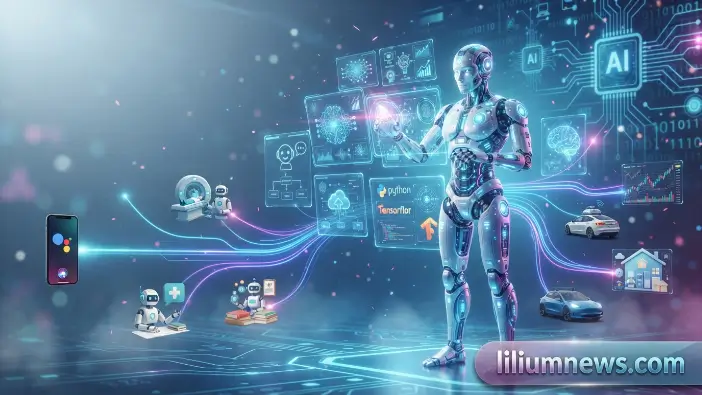
Artificial Intelligence is generally divided into three main types based on the level of intelligence and capabilities of machines. These types help us understand how AI systems work and how closely they can perform tasks similar to human intelligence. It helps AI systems perform advanced tasks such as image recognition, speech understanding, language translation, and self-driving technology.
Narrow AI (Weak AI)
Narrow AI is designed to perform a specific task or limited set of tasks. It helps AI systems perform advanced tasks such as image recognition, speech understanding, language translation, and self-driving technology.
Examples include:
- Voice assistants
- Face recognition systems
- Recommendation systems
- Chatbots
Most AI systems used today are examples of Narrow AI.
General AI (AGI)
General AI, also known as Artificial General Intelligence (AGI), refers to a future form of Artificial Intelligence that could understand, learn, and perform a wide range of tasks similar to human intelligence. Unlike Narrow AI, which is designed for specific tasks, General AI would have the ability to adapt, reason, and solve different types of problems.
Currently, General AI has not been fully developed and remains a goal for researchers around the world. Scientists are working on creating AI systems that can think more flexibly, understand complex situations, and perform tasks with human-like intelligence.
Super AI
Super AI is a theoretical concept of Artificial Intelligence where machines could become more intelligent than humans in areas such as learning, problem-solving, creativity, and decision-making. This type of AI is expected to have advanced abilities that go beyond human intelligence.
Currently, Super AI does not exist and remains a concept discussed by researchers and technology experts. It is considered a possible future development of AI, but its creation would involve major scientific, ethical, and technological challenges.
Real-Life Examples of AI
AI has become an essential part of modern everyday life, helping people complete tasks faster and more efficiently. From smartphones and search engines to online shopping and entertainment platforms, many technologies use Artificial Intelligence to provide smarter and more personalized experiences. From smartphones and search engines to online shopping and entertainment platforms, many technologies use Artificial Intelligence to provide smarter and more personalized experiences.
Uses of AI in Daily Life
Common examples of AI include. From smartphones and search engines to online shopping and entertainment platforms, many technologies use Artificial Intelligence to provide smarter and more personalized experiences.
- Google search suggestions
- YouTube video recommendations
- Face unlock technology
- Online shopping recommendations
- Voice assistants
- Spam email detection
- Translation applications
When platforms like Netflix or YouTube recommend content based on your interests, AI algorithms are responsible for those suggestions.
Examples of Popular AI Tools
Many AI tools are available today that help people complete different tasks more easily . When platforms like Netflix or YouTube recommend content based on your interests, AI algorithms are responsible for those suggestions. These tools are useful for students, professionals, businesses, and creators.
Examples include:
- ChatGPT for answering questions and generating content
- AI image generators for creating images
- AI writing tools for content creation
- AI translation tools for language conversion
These tools are useful for students, professionals, businesses, and creators.
Where Is AI Used?
Artificial Intelligence is being used in almost every major industry. Artificial Intelligence is used in almost every major industry and has become an important technology for improving efficiency, accuracy, and decision-making. From healthcare and education to business, transportation, and entertainment, AI helps organizations and individuals solve problems and complete tasks more effectively.
AI in Education
AI helps make education more personalized and effective by understanding the learning needs, strengths, and weaknesses of individual students. It can provide customized learning materials, suggest improvements, and help students learn at their own pace.
Uses include:
- AI tutors
- Automated assignment checking
- Personalized learning recommendations
- Language learning applications
AI can provide students with learning support according to their needs and learning speed.
AI in Healthcare
AI helps doctors and researchers make better decisions.AI can provide students with learning support according to their needs and learning speed.AI is making healthcare faster, smarter, and more accurate. Businesses use AI to improve productivity and efficiency
Uses include:
- Disease detection
- Medical image analysis
- Drug research
- Patient monitoring
AI is making healthcare faster, smarter, and more accurate.
AI in Business and Jobs
Businesses use AI to improve productivity and efficiency.AI helps automate repetitive tasks and allows employees to focus on more important activities.AI is making healthcare faster, smarter, and more accurate.AI can provide students with learning support according to their needs and learning speed.
Examples:
- Customer support chatbots
- Data analysis
- Marketing automation
- Fraud detection
AI helps automate repetitive tasks and allows employees to focus on more important activities.
Benefits and Advantages of AI
Artificial Intelligence provides many important benefits that help individuals, businesses, and industries work more efficiently. AI can process large amounts of information quickly, automate repetitive tasks, improve accuracy, and support better decision-making. By reducing human effort and saving time, AI allows people to focus on more creative and complex tasks. From healthcare and education to business and technology, AI is helping improve productivity, efficiency, and innovation across different fields.
Saves Time
AI can complete repetitive tasks quickly and efficiently because it is designed to process information and perform specific actions automatically. Unlike humans, AI systems can work continuously without getting tired, making them useful for handling routine tasks such as organizing data, answering common customer questions, checking documents, and managing simple processes.
For example, businesses use AI chatbots to respond to frequently asked customer questions, while companies use AI tools to analyze large amounts of data within seconds. By automating these repeated tasks, AI saves time, reduces errors, and allows people to focus on more complex and creative work.
Better Accuracy
AI can analyze large amounts of data and provide accurate results because it can process and identify patterns in information much faster than humans. AI systems use advanced algorithms and machine learning techniques to examine huge datasets, find useful insights, and make predictions based on the available information.
For example, in healthcare, AI can analyze medical images and help detect diseases at an early stage. In business, AI can study customer behavior and market trends to support better decisions. By reducing human errors and improving data analysis, AI helps organizations achieve faster and more reliable results.
Automation
AI allows machines to perform tasks automatically by enabling them to understand information, learn from data, and make decisions without constant human control. Through advanced algorithms and machine learning, AI systems can complete specific tasks based on the instructions and data they receive.
For example, self-driving cars use AI to detect roads, recognize objects, and make driving decisions automatically. Similarly, smart assistants can answer questions, set reminders, and perform actions based on voice commands. This automation helps save time, improve efficiency, and reduce manual effort.
Disadvantages and Challenges of AI
Although AI provides many benefits, it also has some challenges that need to be considered. While AI improves efficiency, saves time, and helps in better decision-making, it can also create concerns related to privacy, security, employment, and the accuracy of information. For example, AI systems require large amounts of data to work effectively, which can raise data privacy concerns. In addition, overdependence on AI and automation may affect certain jobs and require people to develop new skills to adapt to changing technology.
Common Problems Related to AI
While Artificial Intelligence offers many advantages, it also comes with several challenges that can affect individuals, businesses, and society. Understanding these issues is important for using AI responsibly and making informed decisions about its applications.
Some of the most common problems related to AI include job automation, data privacy concerns, biased or inaccurate results, cybersecurity risks, and overdependence on technology. Addressing these challenges through proper regulations, ethical AI development, and human oversight can help ensure that AI is used safely and effectively.
Common Mistakes While Using AI
People often make some common mistakes when using AI tools. Some of the most common problems related to AI include job automation, data privacy concerns, biased or inaccurate results, cybersecurity risks, and overdependence on technology. Addressing these challenges through proper regulations, ethical AI development, and human oversight can help ensure that AI is used safely and effectively.
- Accepting AI answers without verification
- Sharing private information with AI tools
- Considering AI a complete replacement for humans
- Ignoring AI limitations
The best approach is to use AI as a helpful tool and always verify important information.
Frequently Asked Questions
What does AI ka matlab kya hota hai?
AI ka matlab kya hota hai means Artificial Intelligence. It is a technology that gives machines the ability to perform tasks similar to human intelligence.
What is the full form of AI?
The full form of AI is Artificial Intelligence. The best approach is to use AI as a helpful tool and always verify important information.
Where is AI used?
AI is used in education, healthcare, business, smartphones, search engines, online shopping, and many other industries.
Can AI replace humans?
AI can automate many tasks, but it cannot completely replace human creativity, emotions, critical thinking, and decision-making abilities.
Can beginners learn AI?
Yes, beginners can learn basic AI concepts easily. With step-by-step learning, anyone can understand how AI technology works.
Conclusion
Now you have a clear understanding of AI ka matlab kya hota hai and its importance in today’s digital world. Artificial Intelligence is a powerful technology that enables machines to learn from data, recognize patterns, make decisions, and perform tasks that usually require human intelligence. Whether it is voice assistants, online shopping recommendations, healthcare systems, or smart applications, AI is already improving the way people live and work.
As technology continues to advance, the role of AI will become even more significant across industries such as education, healthcare, business, transportation, and scientific research. While AI offers many benefits, it should always be used responsibly and alongside human judgment. By understanding the basics of Artificial Intelligence today, you will be better prepared for a future where AI plays an even greater role in everyday life and professional careers.
